
Signs of separation anxiety in dogs (and how a camera helps you see them)
Separation anxiety mostly happens when you're not there to see it. Here are the signs to look for, the problems that look similar, and how to get your dog the right help.

Michal Wlosik
· 3 min read
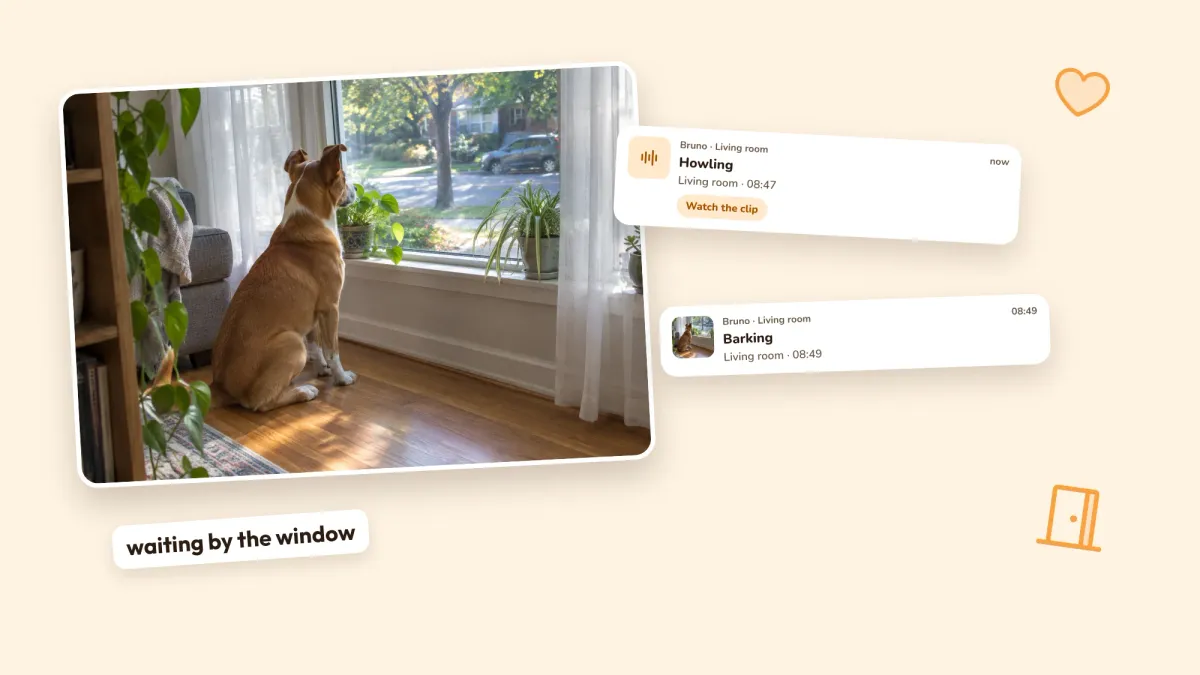
Separation anxiety is a real welfare problem: a dog who is genuinely distressed when left alone. It's also easy to miss, because the signs appear when you're not there. Here's what to look for, and how to see it for yourself.
Common signs
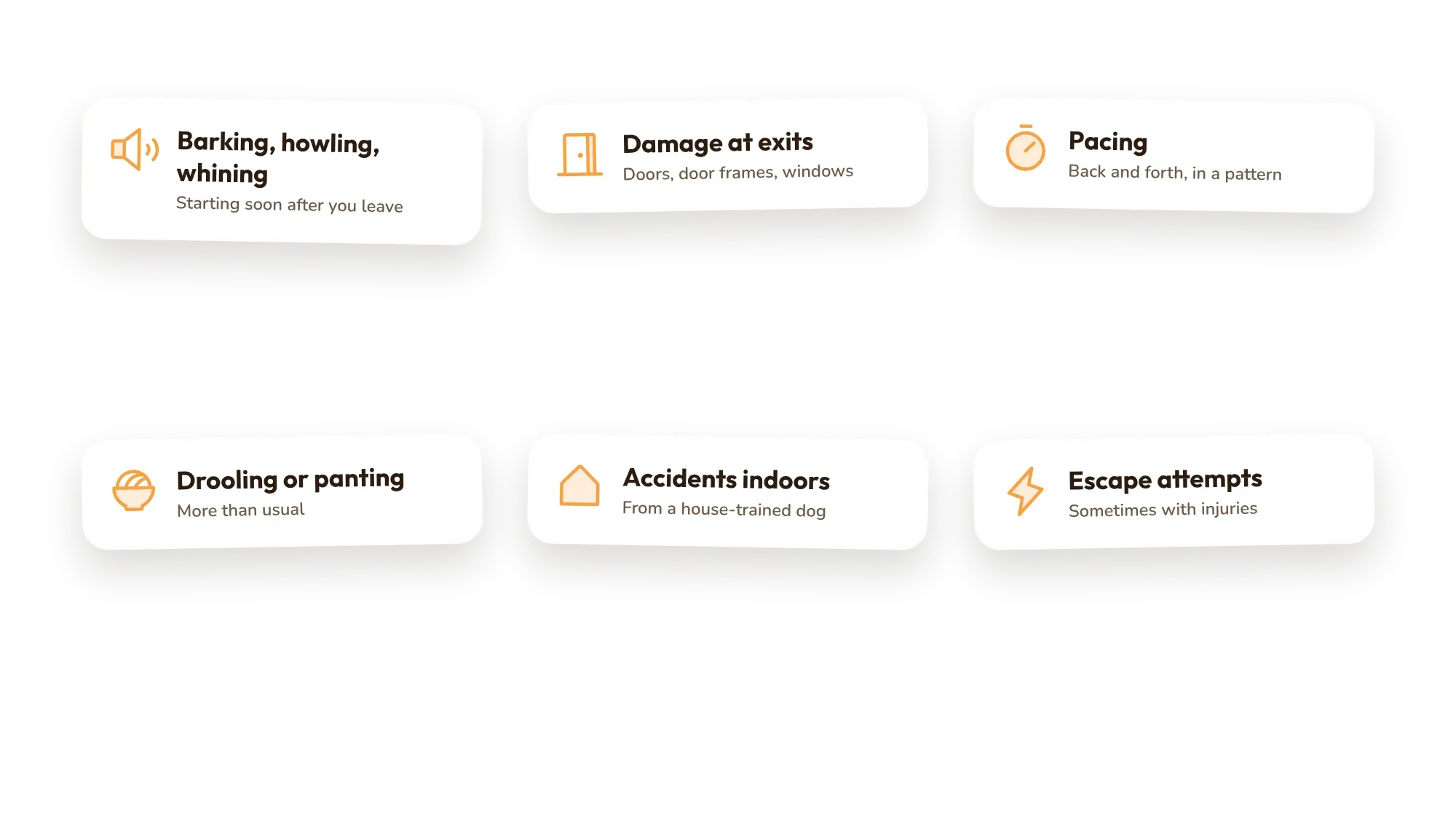
The ASPCA lists these among the common signs, typically when the dog is alone or about to be:
- Barking, howling or whining that starts soon after you leave
- Chewing, digging or destruction, especially around doors and windows
- Escape attempts, sometimes leading to injuries
- Pacing in a fixed pattern
- Urinating or defecating indoors in a house-trained dog
- Drooling and panting more than usual
Many dogs also show worry as you get ready to leave: following you from room to room, trembling, or trying to block the door.
Things that look similar
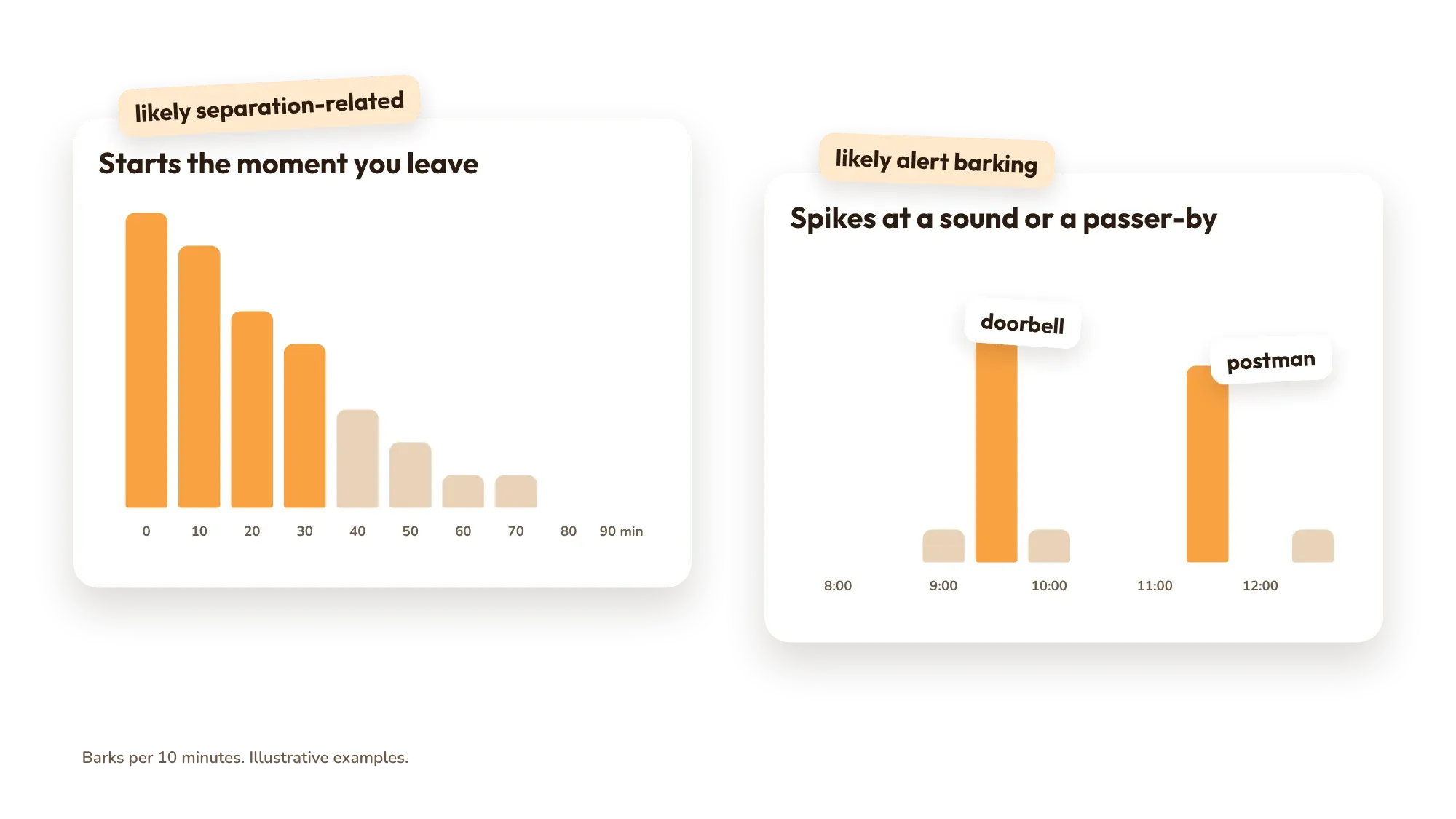
Not every dog who barks or chews when alone has separation anxiety. Boredom, incomplete house training, alert barking at noises, and medical issues can all look alike. That's why a vet check comes first, and why watching what actually happens is so useful.
How a camera helps
A camera turns "I think" into "I know". With Bruno on a spare Android phone you'll see:
- When it starts: barking, whining or howling in the first minutes after you leave is a strong clue.
- What it looks like: clips show pacing, waiting at the door or scratching.
- Whether it settles: a calm-for-20-minutes alert tells you when your dog relaxes, if they do.
- Progress: week-by-week, the timeline shows whether training is working.
Share the clips with your vet or behaviourist. They're far more useful than a description.

See what happens when you leave.
Bruno records clips of barking, whining and howling, and tells you when your dog settles. Free on Google Play.
What helps
- Start with your vet, who can rule out medical causes and discuss whether medication could help alongside training.
- Work with a qualified behaviourist on a plan of very gradual absences that stay below your dog's panic point.
- Avoid leaving your dog longer than they can cope with while you train: daycare, sitters or friends can bridge the gap.
- Never punish. Your dog isn't being naughty; they're frightened.
Questions people ask
Can separation anxiety be cured?
Does crating help separation anxiety?
Track progress, day by day.
Bruno's timeline shows whether your dog is settling sooner.
Written by
Indie app builder and pet lover based in Wrocław, Poland. I make Bruno so you can check on your dog with a phone you already own. Co-author of The AdTech Book.
Keep reading
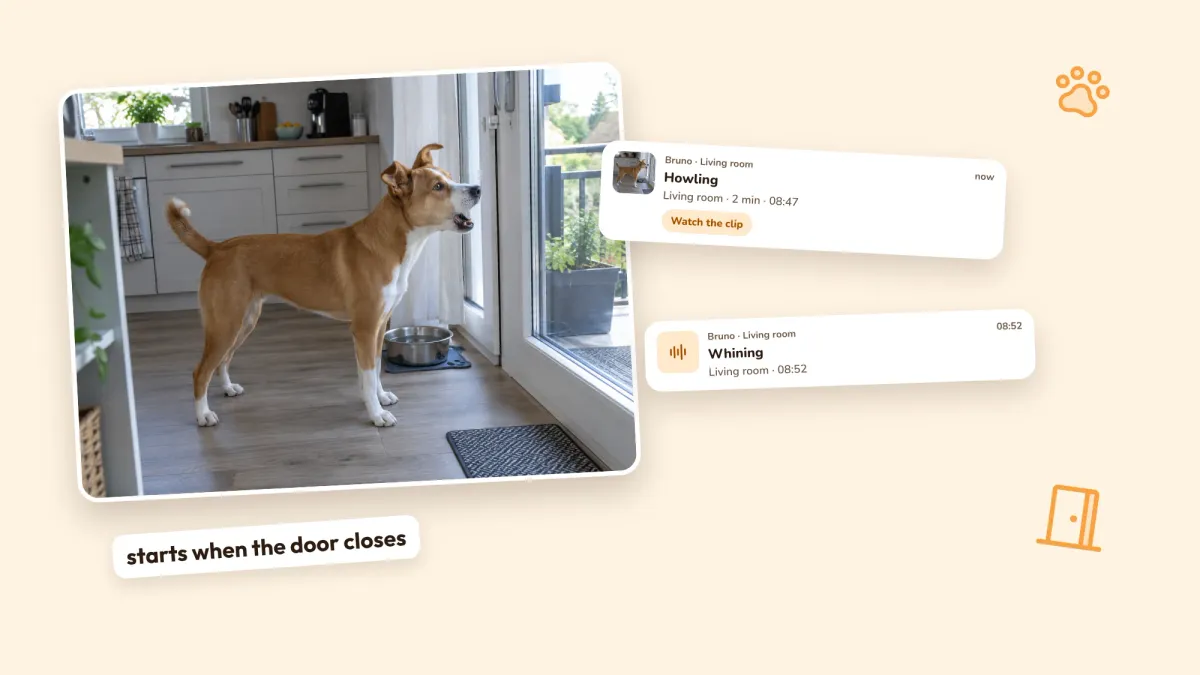
Why does my dog howl when I leave?
Howling when you leave is a dog calling for its people. Here's what it means, how to tell it apart from other howling, and how to help your dog feel OK on their own.
How to entertain a dog home alone: 12 ideas that work
A busy dog is a calm dog. Food puzzles, chews, sound, scent games and a voice from home: 12 ideas to keep your dog content while you're out.
How long can a dog be left alone? (By age)
Puppies, adolescents, adults and seniors all cope differently with time alone. Here's a realistic guide by age, the signs your dog is alone too long, and how to make long days easier.
Questions or thoughts? Share them below.