
Do bark collars and anti-bark devices work? A humane guide
Shock, spray, vibration and ultrasonic devices promise quiet. Here's what they do, what veterinary behaviourists recommend instead, and how to fix the reason your dog barks.

Michal Wlosik
· 2 min read
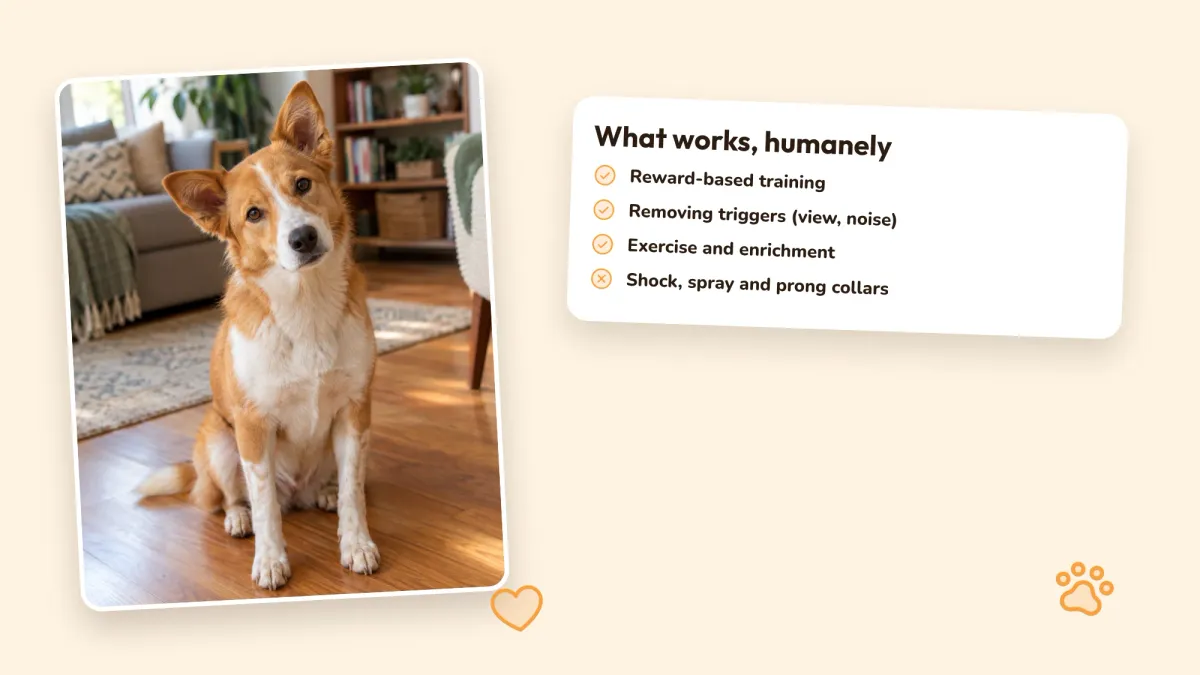
When barking becomes a problem, a gadget that promises instant quiet is tempting. Shock collars, citronella spray collars, vibration collars and ultrasonic boxes are all sold for exactly this. Do they work, and are they a good idea?
The types of anti-bark devices
- Static ("shock") collars: deliver an electric stimulus when the collar detects barking.
- Spray collars: release a burst of citronella or air.
- Vibration collars: vibrate when the dog barks.
- Ultrasonic devices: emit a high-pitched sound, on a collar or as a box on the wall.
All of them work the same way: they make barking unpleasant, so the dog barks less. That's what trainers call an aversive method.
What the experts say
The American Veterinary Society of Animal Behavior's position statement says reward-based training should be used for all dog training, including behaviour problems, and that aversive methods should not be used. Its reasoning: aversive tools can cause stress and fear, and they don't address why the dog is barking.
That last point matters most. A dog who barks because they're anxious about being alone is still anxious when the collar stops the barking. You've only turned the volume down on the symptom.
Other problems with bark devices
- False triggers: some collars react to other dogs barking or loud noises.
- Fallout: a dog may link the unpleasant feeling to whatever they were looking at, such as visitors or other dogs.
- They don't work when the cause is strong: a frightened dog may keep barking anyway.

Find the cause instead.
Bruno shows you what your dog barks at while you're out, with a clip from 5 seconds before. Free on Google Play.
What works instead
- Find out why. Alert, demand, boredom, fear, separation or excitement barking each need different fixes. A camera like Bruno shows what happens just before each bark, even when you're out.
- Remove triggers: block the view of the street, add background sound, move your dog's bed.
- Meet their needs: exercise, sniffing, chews and food puzzles.
- Reward quiet: notice and reward calm moments, and teach an alternative like going to a mat when the doorbell rings.
- Get professional help for anxiety or fear: your vet, then a qualified behaviourist.
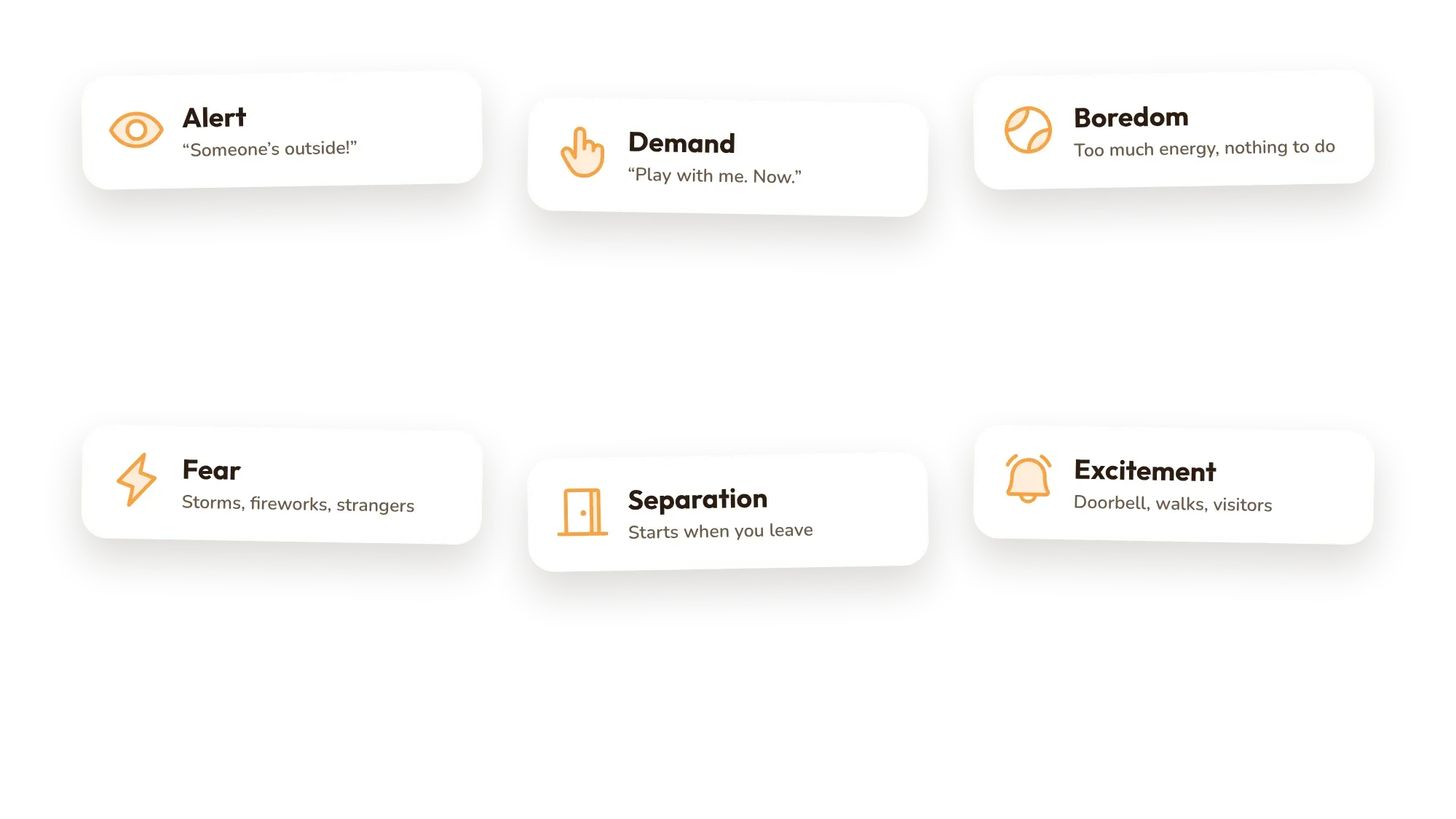
Read the full plan in how to stop dog barking.
Questions people ask
Are bark collars cruel?
Do ultrasonic bark deterrents work?
Understand the bark.
Bruno is a free dog camera app for the Android phone already in your drawer.
Written by
Indie app builder and pet lover based in Wrocław, Poland. I make Bruno so you can check on your dog with a phone you already own. Co-author of The AdTech Book.
Keep reading
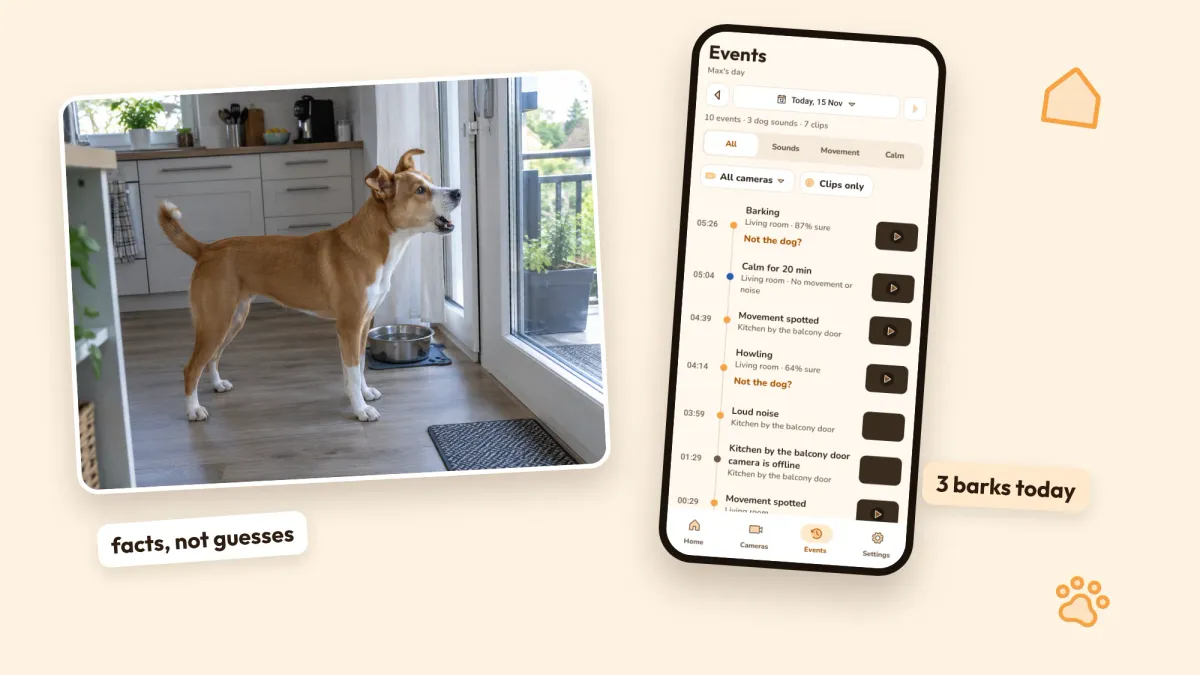
Neighbour says your dog barks all day? How to check, and what to do
A barking complaint stings, especially if your dog is quiet whenever you're home. Here's how to find out what really happens, talk to your neighbour calmly, and fix it.
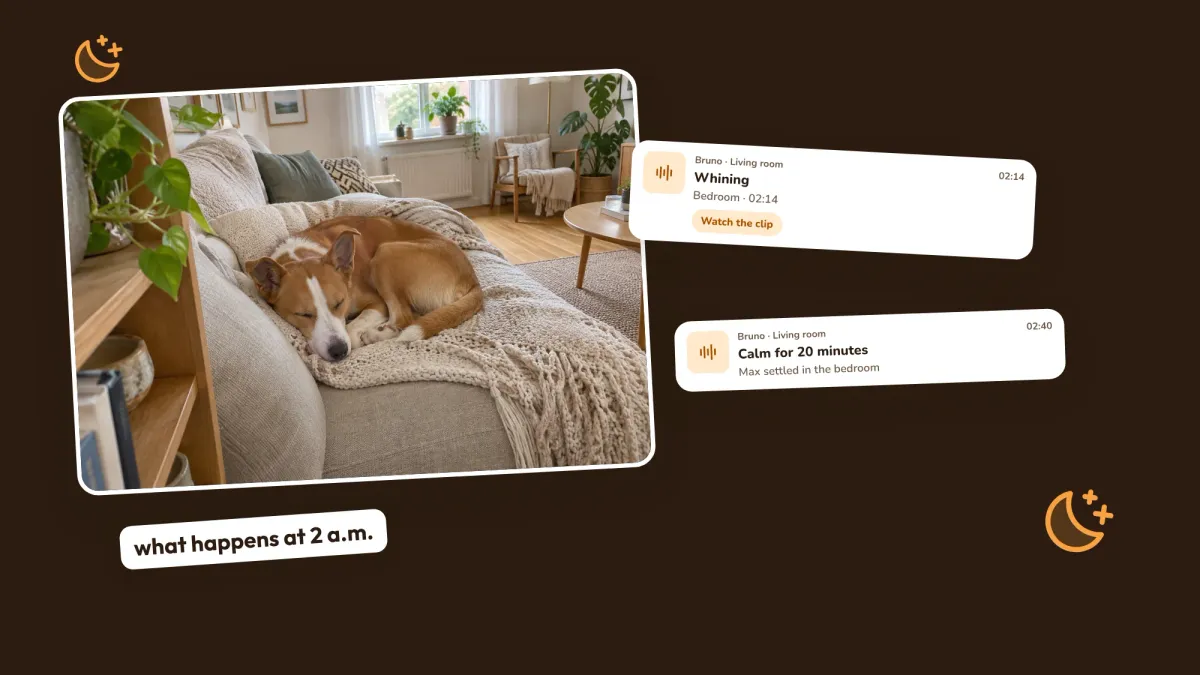
Dog barking or whining at night: causes and fixes
Night-time barking and whining wakes the whole house. Here's why dogs do it, how to find out what's happening at 2 a.m., and the fixes that work for puppies, adults and seniors.
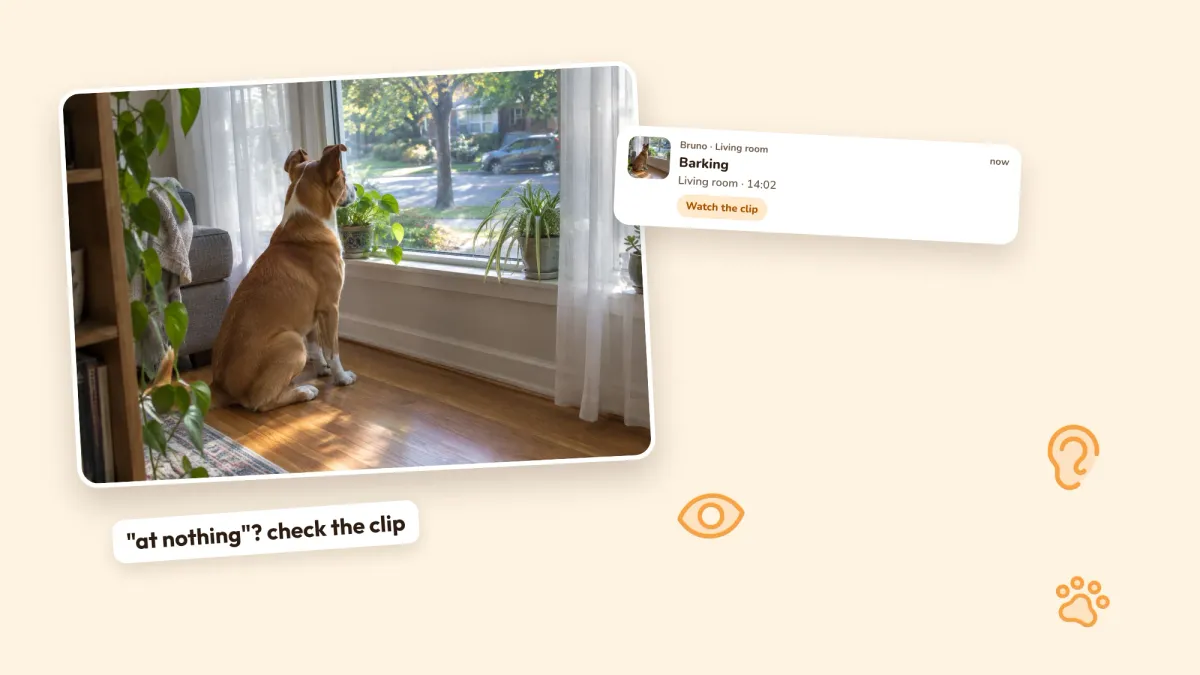
Why is my dog barking at nothing?
Your dog stares at the wall and barks. It isn't nothing: dogs hear, smell and see things we miss. Here are the usual causes, how to find yours, and when to call the vet.
Questions or thoughts? Share them below.