
How to stop your dog barking, even when you're not home
Barking is communication, and you can't fix it until you know what your dog is saying. Here's how to find the cause, what works for each kind of barking, what to avoid, and how to handle barking that happens while you're out.

Michal Wlosik
· 5 min read
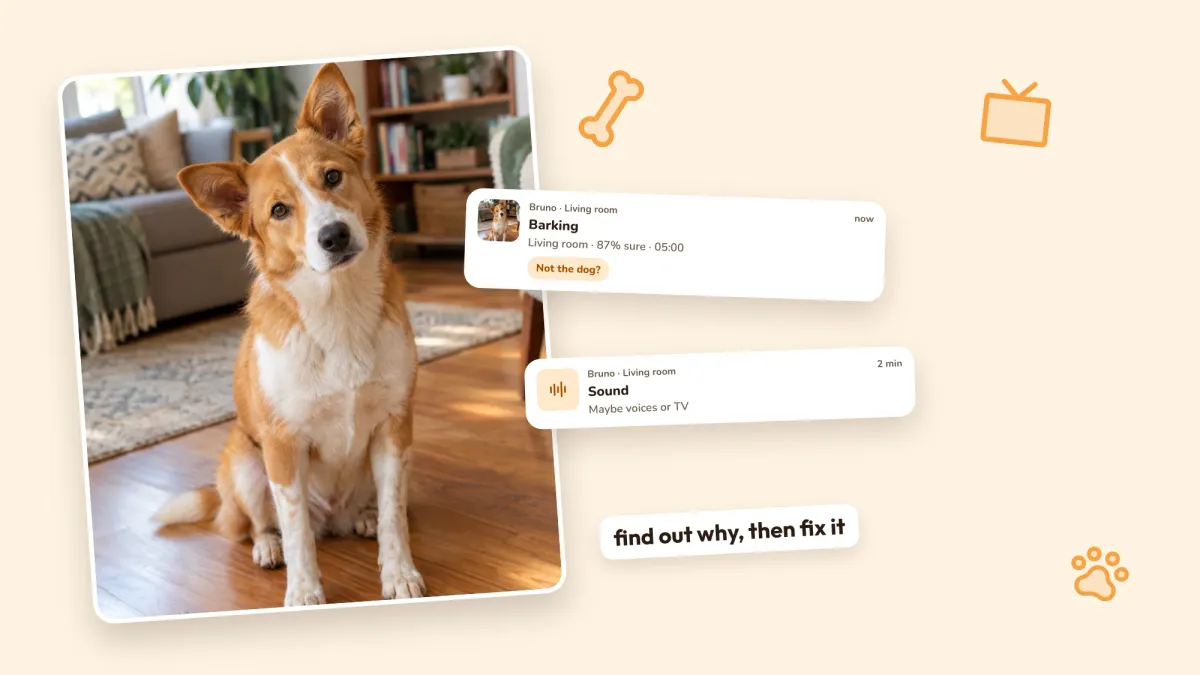
Telling a dog to stop barking almost never works for long, because barking isn't the problem. It's your dog telling you something. Once you know what that is, the fix is usually simple.
This guide walks through the six common reasons dogs bark, how to work out which one is yours (including when it happens while you're out), and the humane fixes that actually last.
Step 1: Work out why your dog is barking
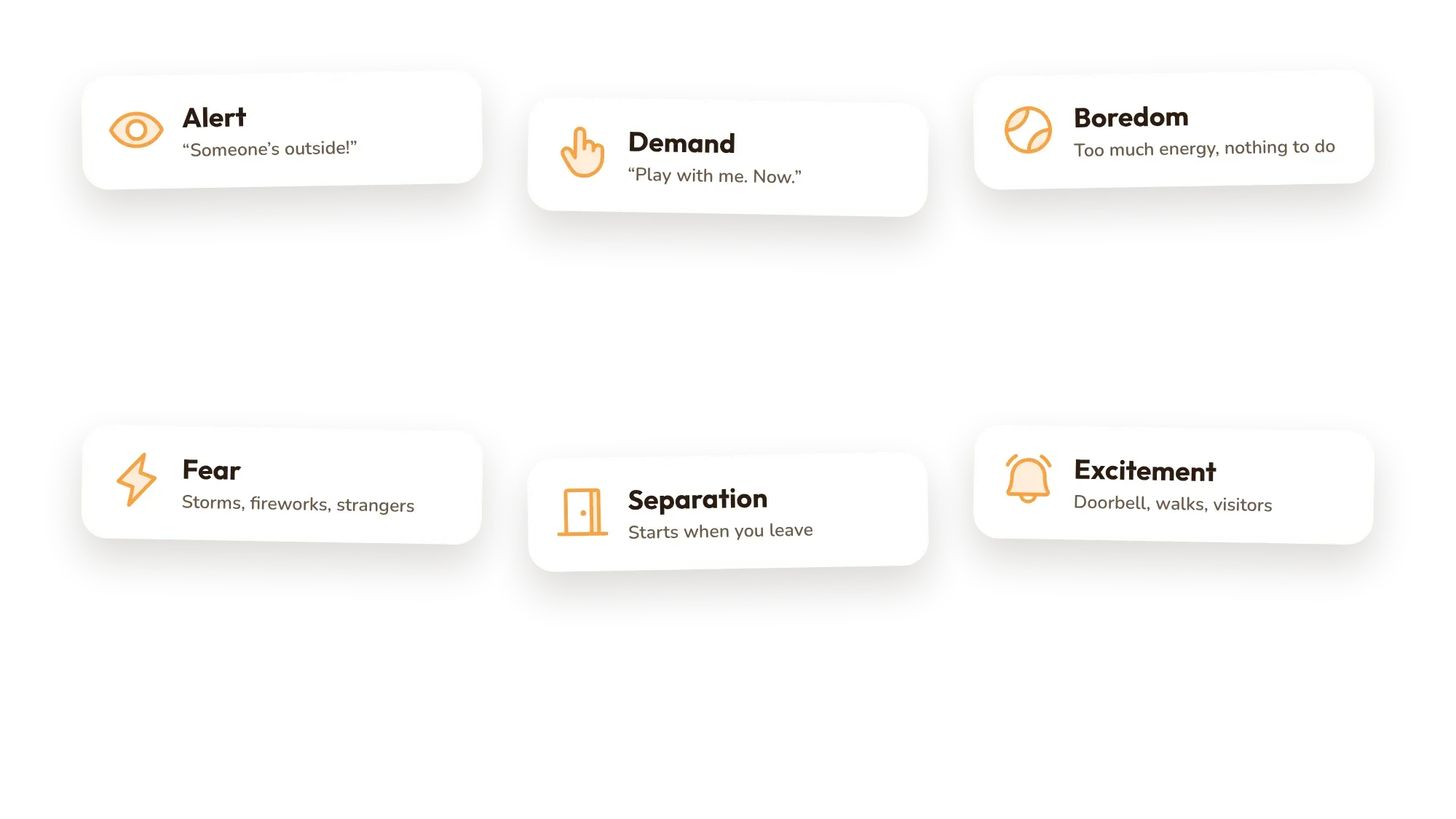
- Alert barking: at people passing the window, footsteps in the hall, the post arriving. "Someone's outside!"
- Demand barking: at you, for food, play or attention. "Now, please."
- Boredom barking: repetitive, often with pacing. Too much energy and nothing to do.
- Fear barking: at storms, fireworks, strangers or new things, often with a lowered body and backing away.
- Separation-related barking: starts when you leave and may come with whining, howling or scratching at the door.
- Excitement barking: at the doorbell, visitors, the lead coming out.
Write down when it happens and what happened just before. Three or four days of notes usually show a clear pattern.
Step 2: Find the trigger, especially when you're out
Barking while you're home is easy to observe. Barking while you're away is guesswork, unless you can see it. A camera turns it into facts.
With Bruno running on an old Android phone, every bark, whine or howl comes with a short clip that starts five seconds before the sound. That's the part that matters: you see the postman walk past, the neighbour's door slam, or your dog staring at the front door ten minutes after you left.
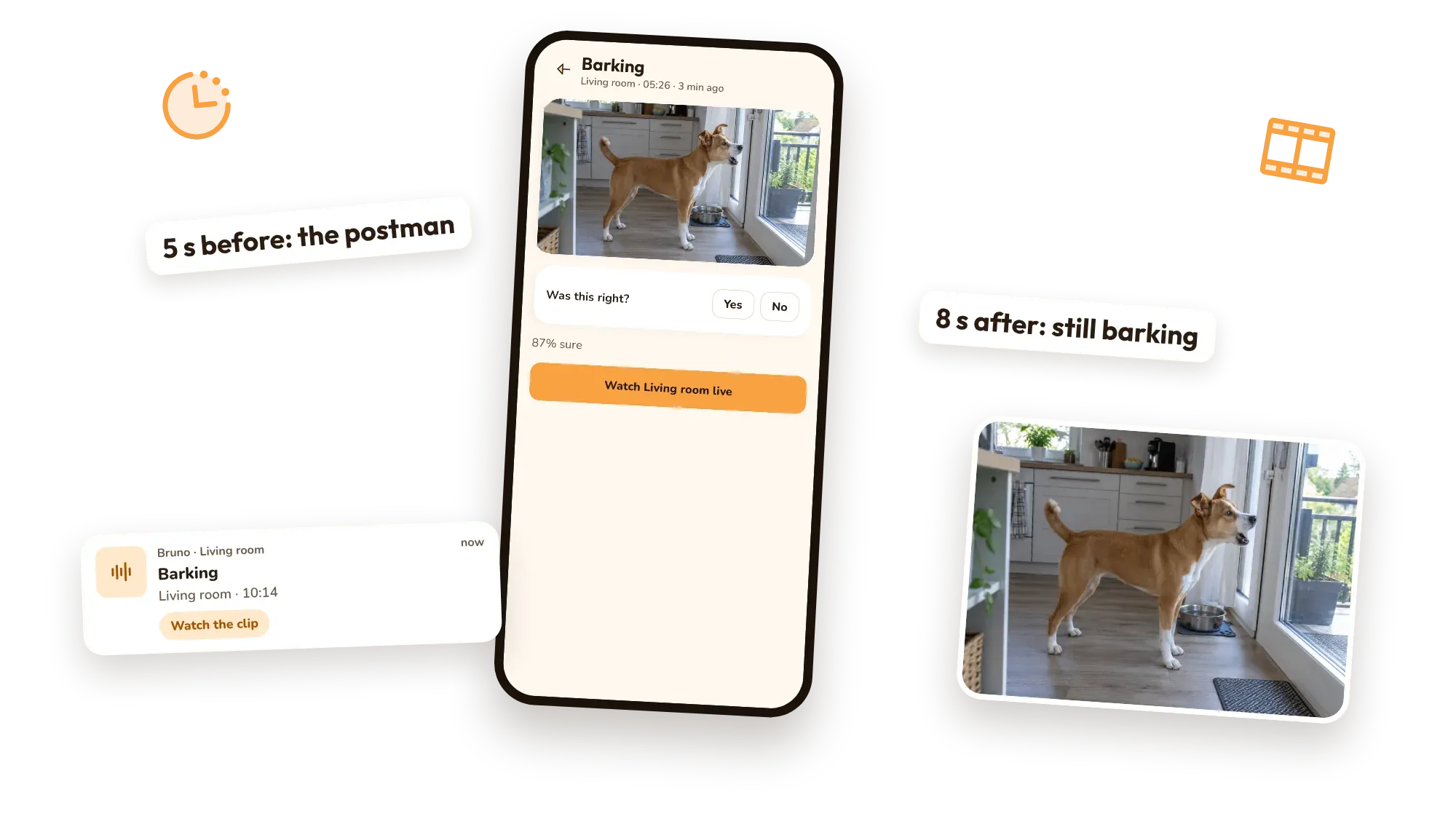

See what your dog barks at while you're out.
Bruno turns a spare Android phone into a dog camera with bark alerts and clips, free.
Not sure whether your dog barks when you leave at all? Start with how to find out, and what the timing tells you.
Step 3: Fix it, by type
Alert barking
- Remove the view. Frosted film on the lower half of windows, or keeping your dog out of the street-facing room, removes most triggers overnight.
- Cover the sounds. A radio or white noise masks footsteps and doors.
- Teach an alternative. When your dog notices a passer-by and stays quiet, reward it. Over time, "person outside" starts to mean "look at my human for a treat".
Demand barking
- Don't pay for barking. Wait for a moment of quiet, then give attention, food or play.
- Get ahead of it. If your dog always barks for dinner at 6, feed at 5:50 before they start, or give a chew while you cook.
Boredom barking
- More exercise and sniffing. A sniff-heavy walk tires many dogs out more than a fast one.
- Feed from puzzles, not a bowl. Frozen stuffed toys last longest.
- Break up long days with a dog walker or a neighbour's visit.
Fear barking
- Give your dog a safe place to retreat to, and let them use it.
- Build confidence slowly with the scary thing at a distance or volume your dog can cope with, paired with good things.
- Talk to your vet if fear is intense or getting worse.
Separation-related barking
- Practise short absences and build up slowly, staying under the point where your dog gets upset.
- Keep departures and returns low-key.
- Measure progress with the camera. Fewer barks in the first 30 minutes, week after week, means it's working.
- Get professional help if it's severe. Separation anxiety is a welfare problem, and a vet can rule out medical causes and refer you to a qualified behaviourist.
Excitement barking
- Teach a doorbell routine: bell rings, dog goes to a mat, treat. Practise with a recording until it's automatic.
- Calm entrances. Greet your dog once they've settled, not while they're bouncing.
Step 4: Talk to your dog from wherever you are
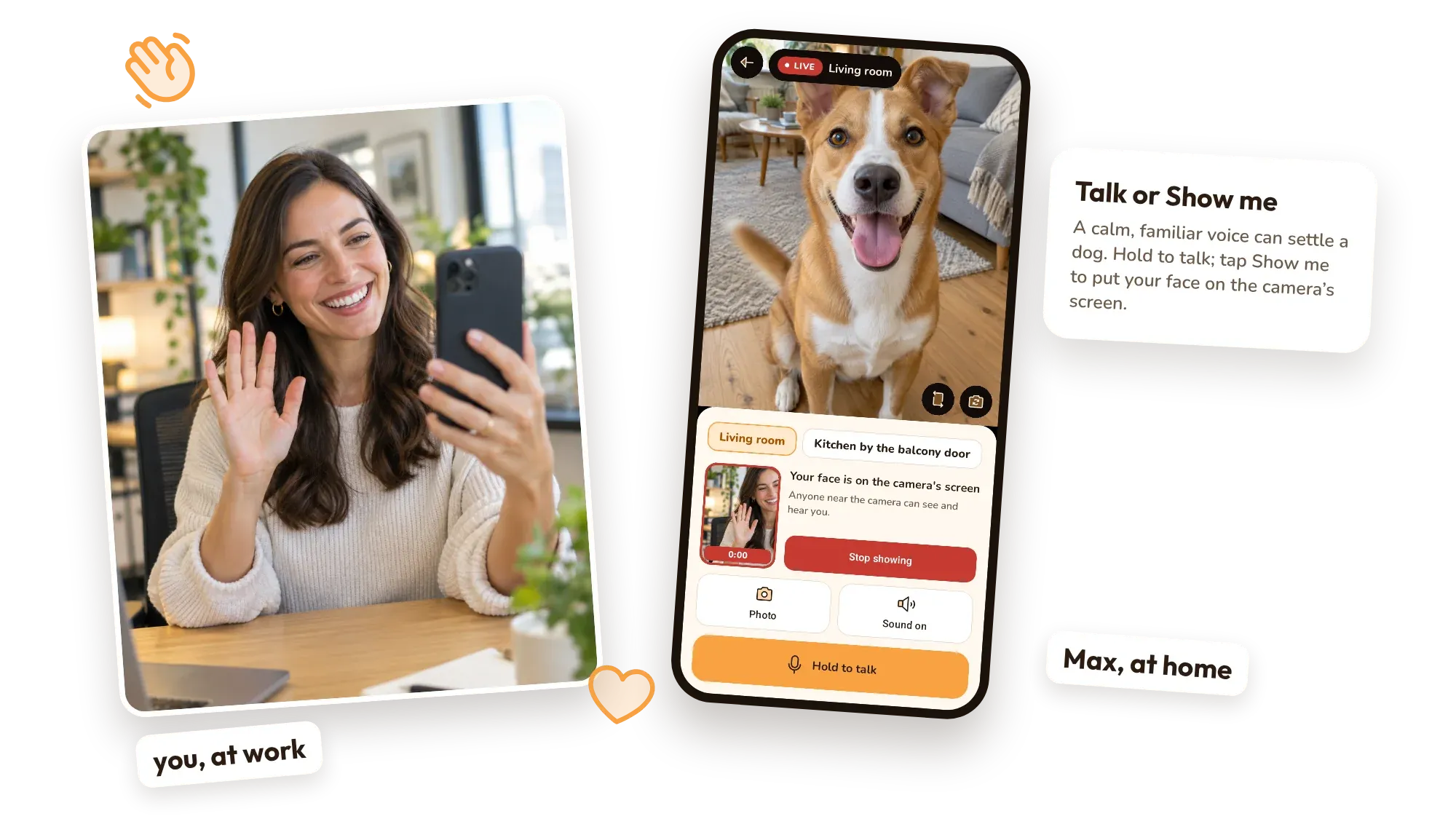
For some dogs, a familiar, calm voice helps them settle. With Bruno you can hold to talk through the camera's speaker, or tap Show me to put your face on its screen, like a video call. Use it to calm a dog who's settling, rather than shouting "quiet!" at a dog who's already wound up; a raised voice can sound like you're joining in.
What to avoid
- Shouting. To your dog, it often sounds like barking along.
- Shock, spray and prong collars. The American Veterinary Society of Animal Behavior recommends reward-based training for all dog training, including behaviour problems, and advises against aversive methods. They can suppress barking while making the underlying fear or stress worse.
- Punishing barking you discover later. Your dog can't connect coming home to a scolding with something they did hours ago.
When to see a vet
Call your vet if the barking started suddenly, your dog seems to be in pain, or an older dog has started barking at nothing, especially at night. Hearing loss, pain and cognitive changes in senior dogs can all show up as new barking.
Questions people ask
How long does it take to stop a dog barking?
Do anti-bark devices work?
Should I comfort my dog when they bark?
How do I know if my dog barks when I'm not home?
Bruno is free on Google Play.
Live view, bark alerts that learn your dog, and a calm timeline of their day, on the phone already in your drawer.
Written by
Indie app builder and pet lover based in Wrocław, Poland. I make Bruno so you can check on your dog with a phone you already own. Co-author of The AdTech Book.
Keep reading
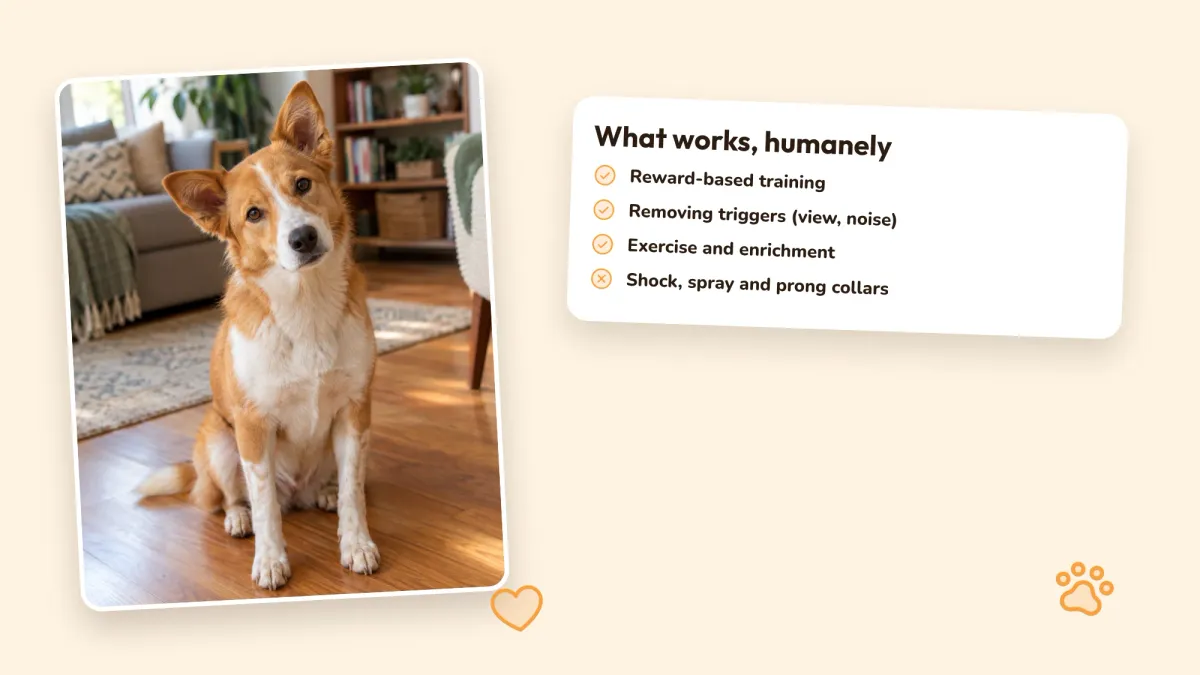
Do bark collars and anti-bark devices work? A humane guide
Shock, spray, vibration and ultrasonic devices promise quiet. Here's what they do, what veterinary behaviourists recommend instead, and how to fix the reason your dog barks.
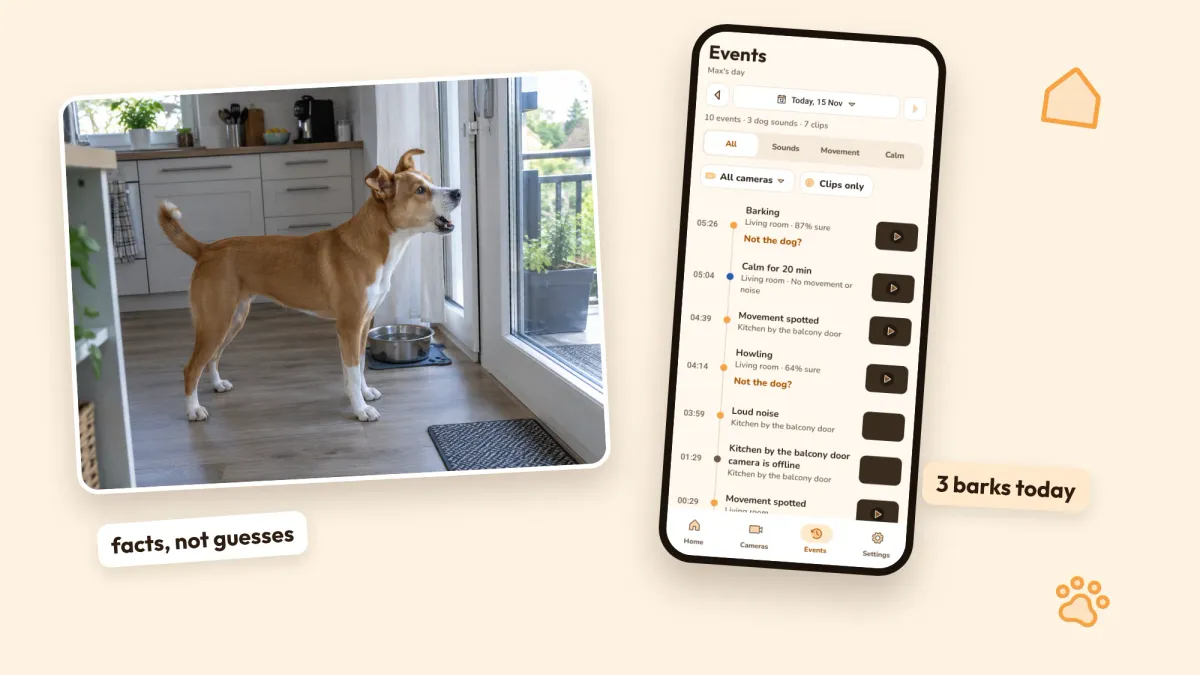
Neighbour says your dog barks all day? How to check, and what to do
A barking complaint stings, especially if your dog is quiet whenever you're home. Here's how to find out what really happens, talk to your neighbour calmly, and fix it.
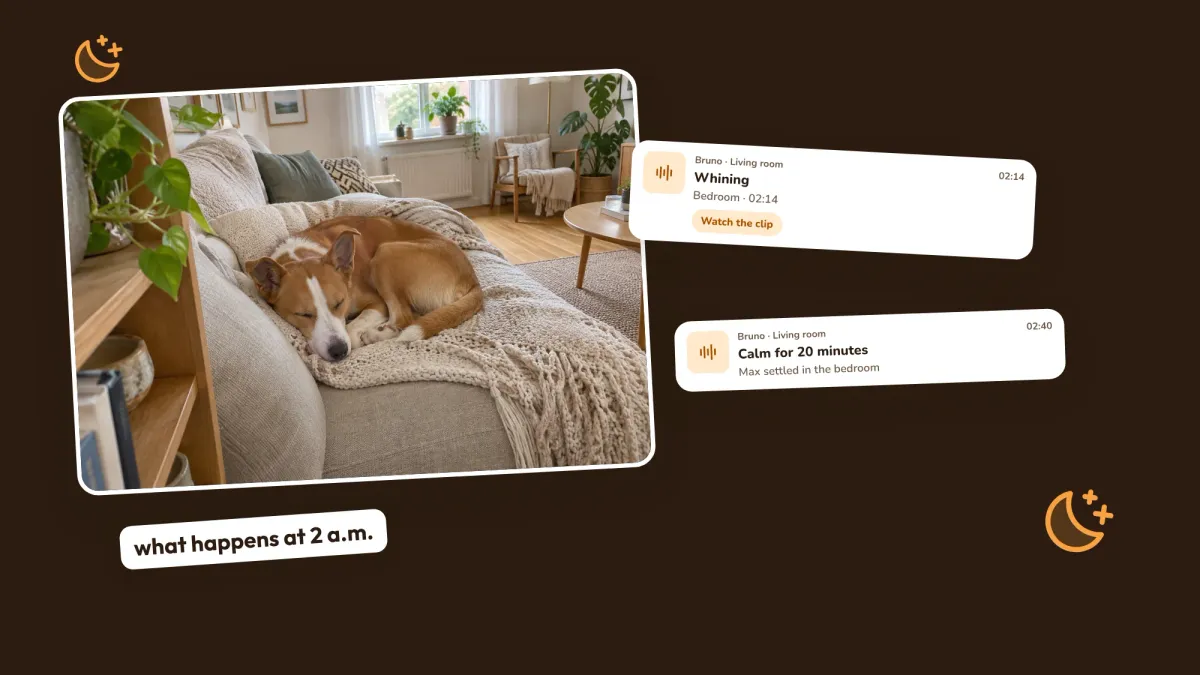
Dog barking or whining at night: causes and fixes
Night-time barking and whining wakes the whole house. Here's why dogs do it, how to find out what's happening at 2 a.m., and the fixes that work for puppies, adults and seniors.
Questions or thoughts? Share them below.