
Does my dog bark when I leave? How to find out, and what to do
A neighbour's note, a hoarse dog, a feeling. Here's how to find out for sure whether your dog barks when you leave, how to read the pattern, and what to do about each kind.

Michal Wlosik
· 4 min read
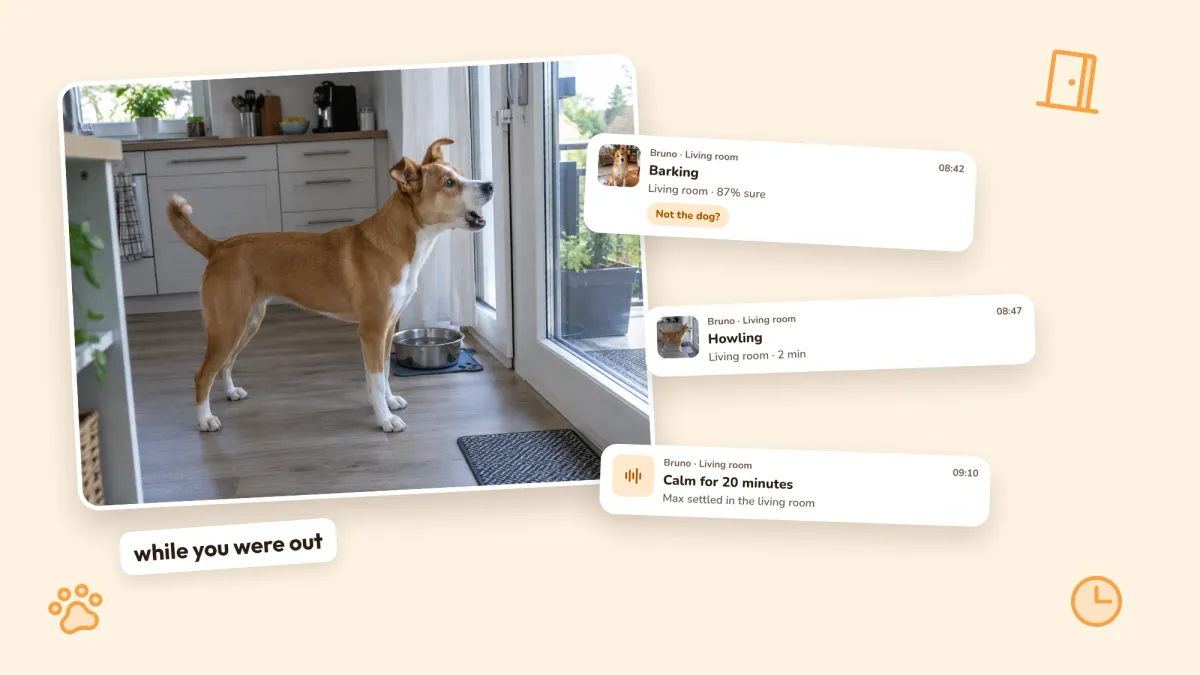
Your dog is perfectly quiet when you're home. Then a neighbour mentions "the barking", or you come back to a dog who sounds a bit hoarse, and you start to wonder what happens after the door closes.
The good news: you don't have to guess. In a day or two you can know exactly whether your dog barks when you leave, when it happens and, most usefully, why.
Signs your dog may be barking while you're out
- A neighbour, landlord or building manager mentions it.
- Your dog's bark sounds hoarse or weak when you get home.
- Scratches or chewing around the front door or windows.
- Drool or a wet chin and chest when you come back.
- You hear barking as you walk away, or as you come up the stairs.
None of these prove it, and many dogs show none of them. The only reliable way to know is to listen.
How to find out for sure
Option 1: Leave a recorder running
The simplest test is a voice recorder or a laptop recording audio. It works, but you'll need to scrub through hours of silence, and you won't see what set your dog off.
Option 2: Turn an old phone into a dog camera
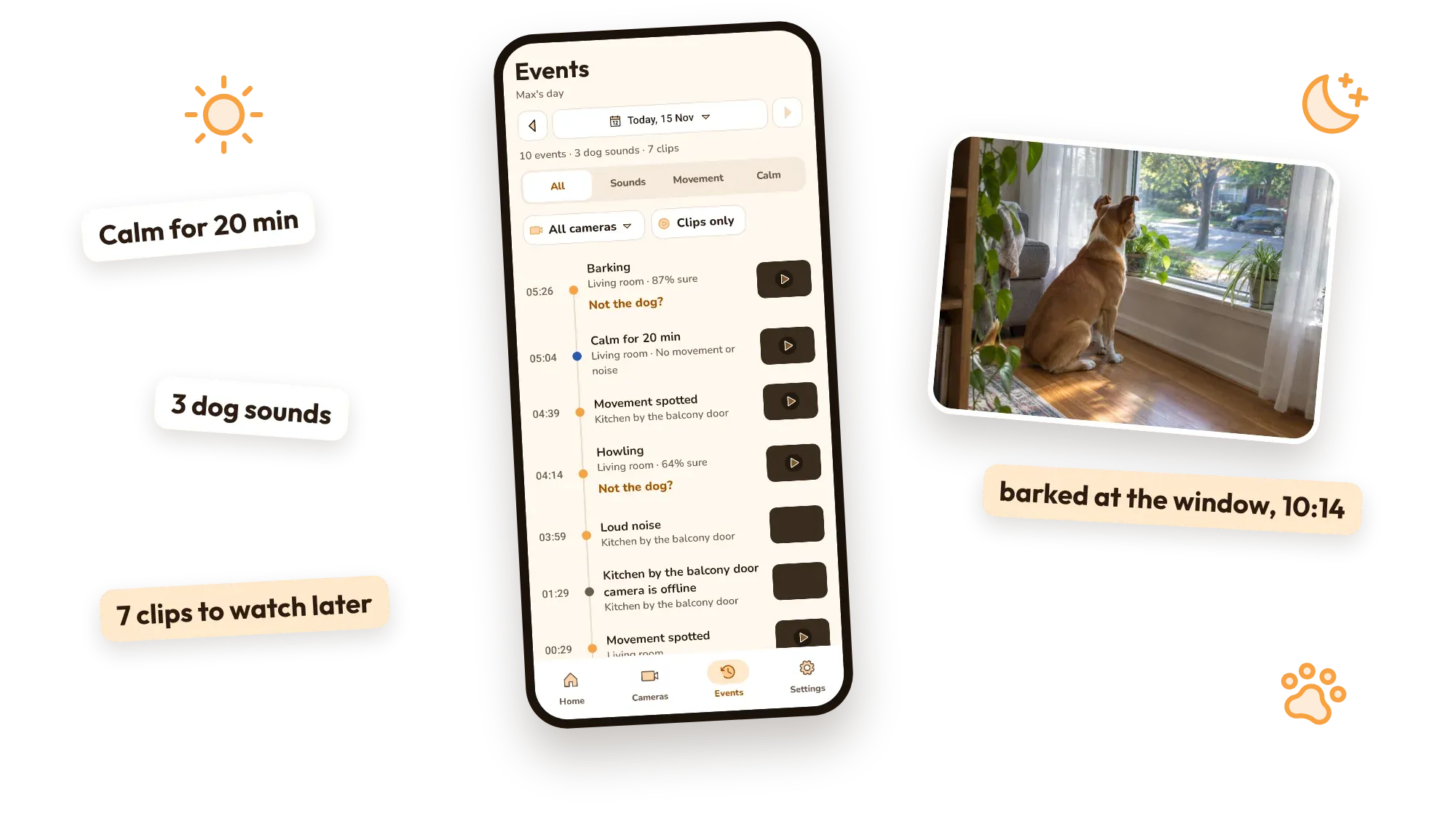
A camera tells you far more. With Bruno on an old Android phone, you get an alert when your dog barks, whines or howls, with a photo and a clip that starts five seconds before the sound. Bruno also tells barking apart from the TV, a doorbell or people talking, so you're not chasing false alarms. Setup takes about ten minutes; here's the step-by-step guide.
At the end of the day, the timeline shows the whole story: when the barking started, how long it lasted, and when your dog settled.

Find out tonight.
Bruno alerts you when your dog barks, whines or howls, with a clip that starts 5 seconds before.
Read the pattern: when matters more than how much
The timing of the barking is the biggest clue to the cause. Watch two or three ordinary days and look for one of these shapes:
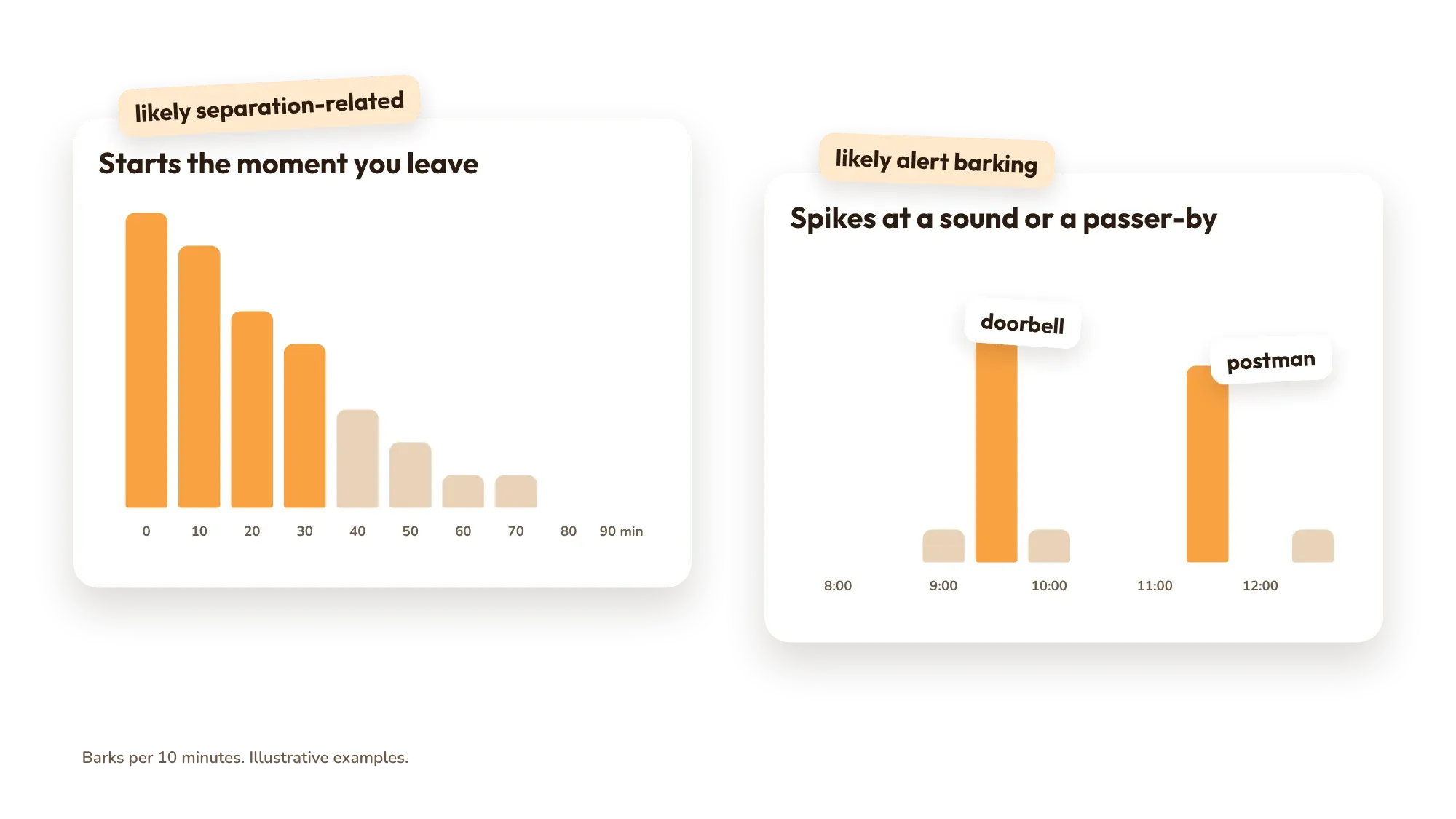
It starts the moment you leave
Barking, whining or howling that begins as the door closes and gradually fades often points to stress about being alone. Look for other signs on the clips too: pacing, scratching at the door, or waiting there.
It spikes at sounds or passers-by
Short bursts at the doorbell, the post, footsteps in the hall or people walking past the window are alert barking. Your dog is "guarding" the home. It's very common and usually easier to fix.
It comes and goes all day
Scattered barking with no clear trigger, often with restlessness, can mean boredom or too much pent-up energy, especially in young or working breeds.
What to do about each kind
If it's about being alone
- Practise short absences. Leave for a minute, come back calmly, and build up slowly. Stay below the point where your dog gets upset.
- Make departures boring. No big goodbyes; pick up your keys and coat at random times without leaving.
- Give them a job as you leave, like a stuffed chew toy or a snuffle mat.
- Use the camera to measure progress. Fewer barks in the first half hour week over week means it's working.
- Get help if it's intense. Real separation anxiety is a welfare issue. Talk to your vet, who can rule out medical causes and refer you to a qualified behaviourist.
If it's alert barking
- Block the view. Frosted window film or closing a door to the street-facing room removes most triggers.
- Mask the noise. Soft background sound, like a radio or white noise, covers footsteps and doors.
- Change what the doorbell means while you're home: ring, then treat on a mat, until the sound predicts something good.
If it's boredom
- A proper walk or sniffing session before you leave.
- Food puzzles and long-lasting chews instead of a bowl.
- A dog walker or a midday visit on long days.
Watch for the good news too
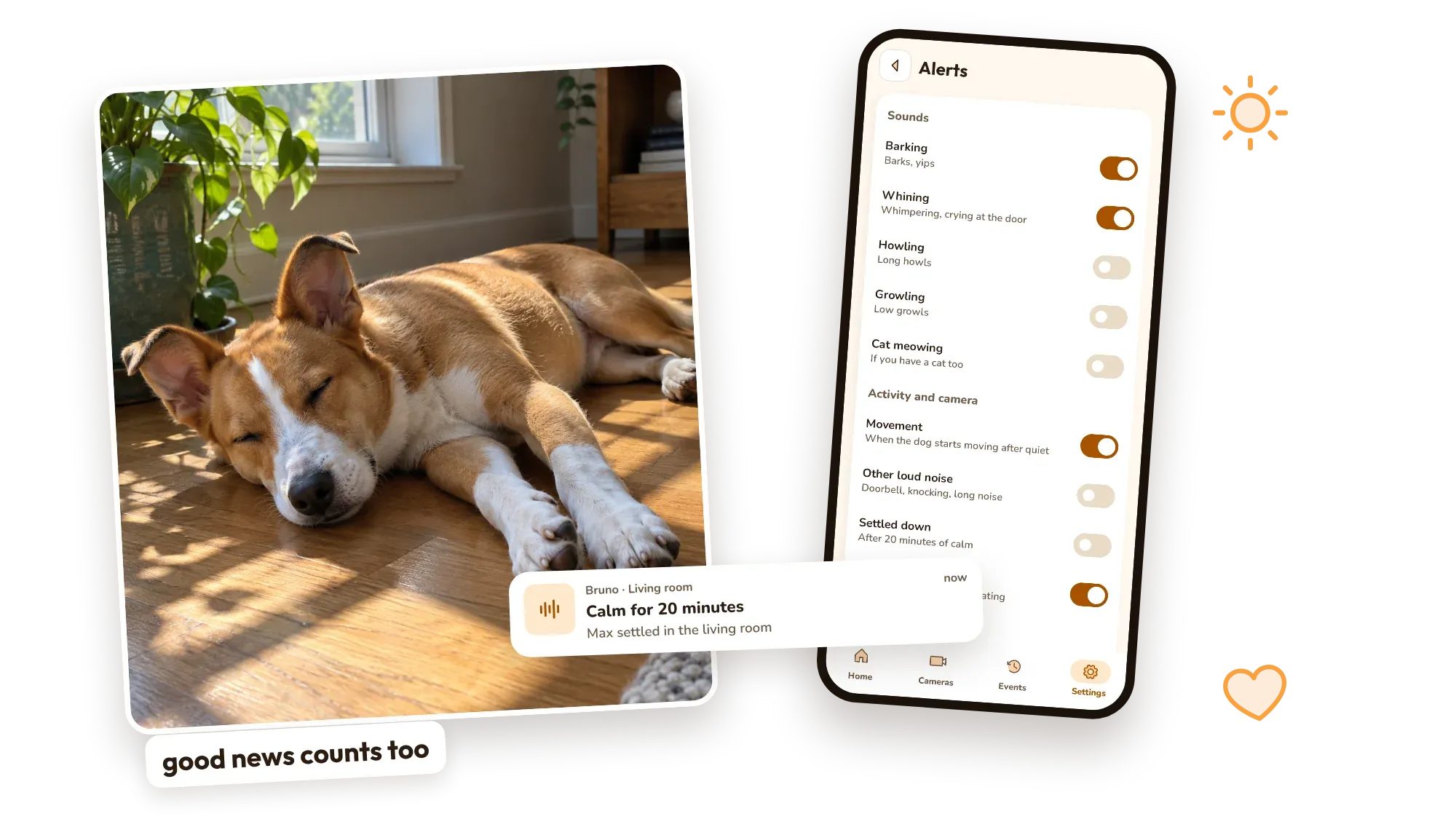
As things improve, the most satisfying alert is the quiet one. Bruno can tell you when your dog has been calm for 20 minutes, so you know they've settled. That's a much nicer notification to get at work.
Keep a record if neighbours complain
If a neighbour has complained, the timeline is also a fair, factual record: when the barking happened and how long it lasted. It helps you have a calm conversation, and shows the improvement as your training works.
For a broader look at causes and fixes, read our guide on how to stop your dog barking, even when you're not home.
Bruno is free on Google Play.
Turn a spare Android phone into a dog camera and see what really happens after you leave.
Written by
Indie app builder and pet lover based in Wrocław, Poland. I make Bruno so you can check on your dog with a phone you already own. Co-author of The AdTech Book.
Keep reading
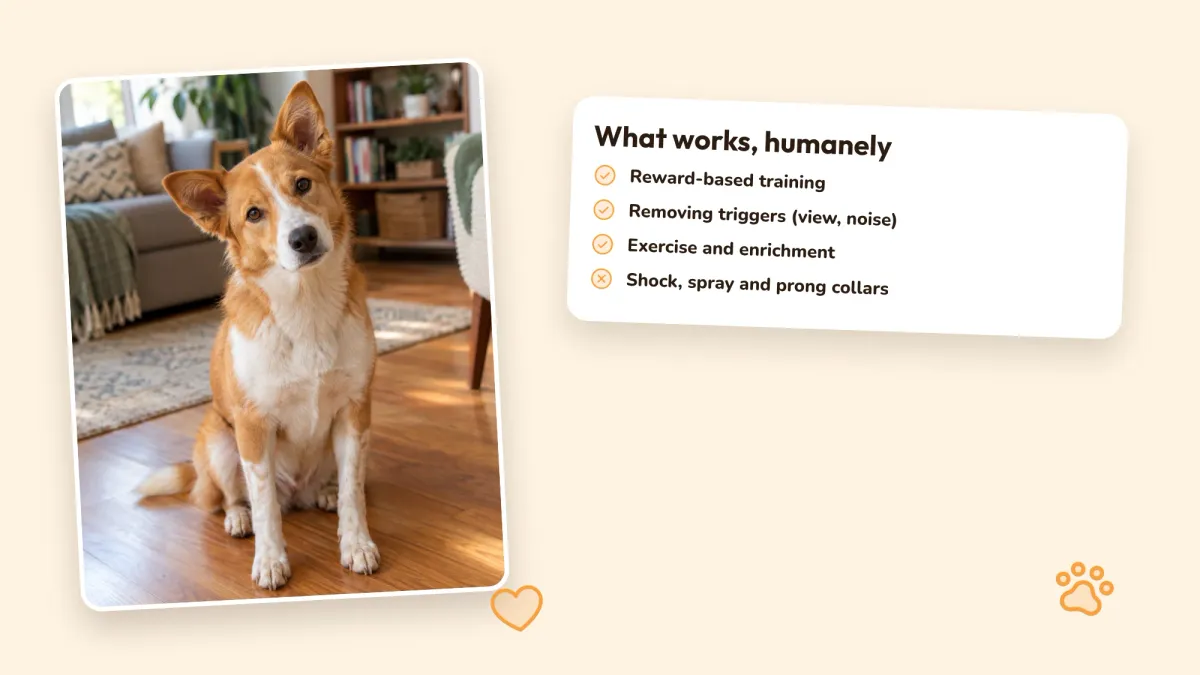
Do bark collars and anti-bark devices work? A humane guide
Shock, spray, vibration and ultrasonic devices promise quiet. Here's what they do, what veterinary behaviourists recommend instead, and how to fix the reason your dog barks.
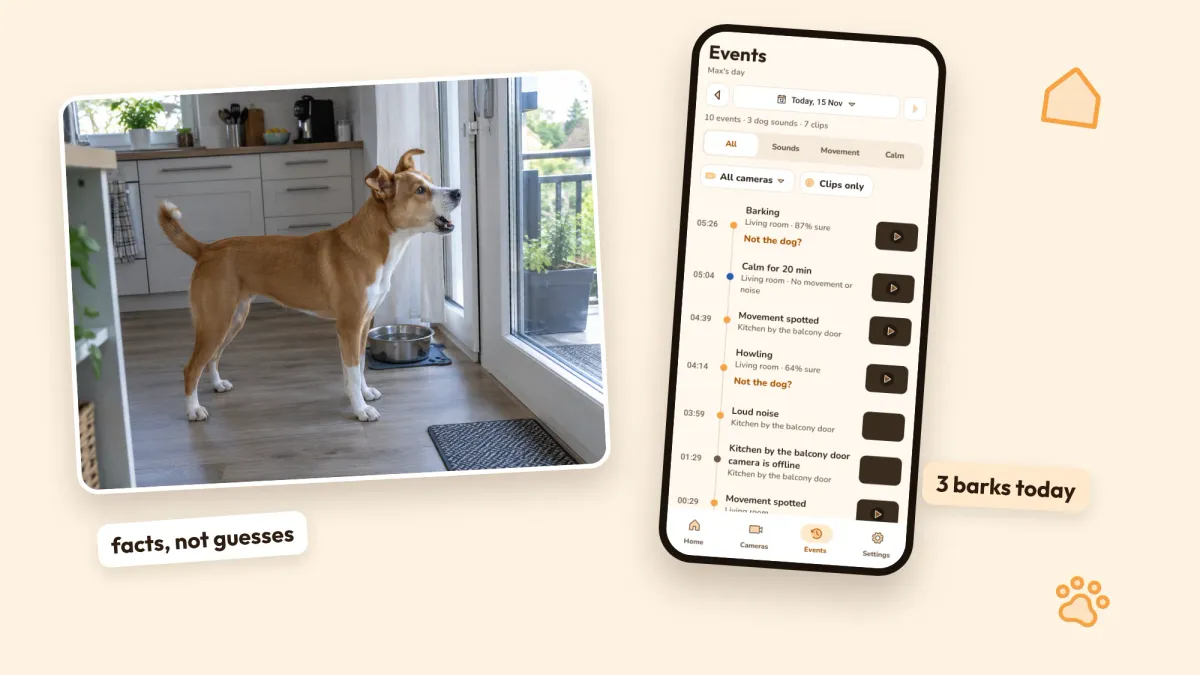
Neighbour says your dog barks all day? How to check, and what to do
A barking complaint stings, especially if your dog is quiet whenever you're home. Here's how to find out what really happens, talk to your neighbour calmly, and fix it.
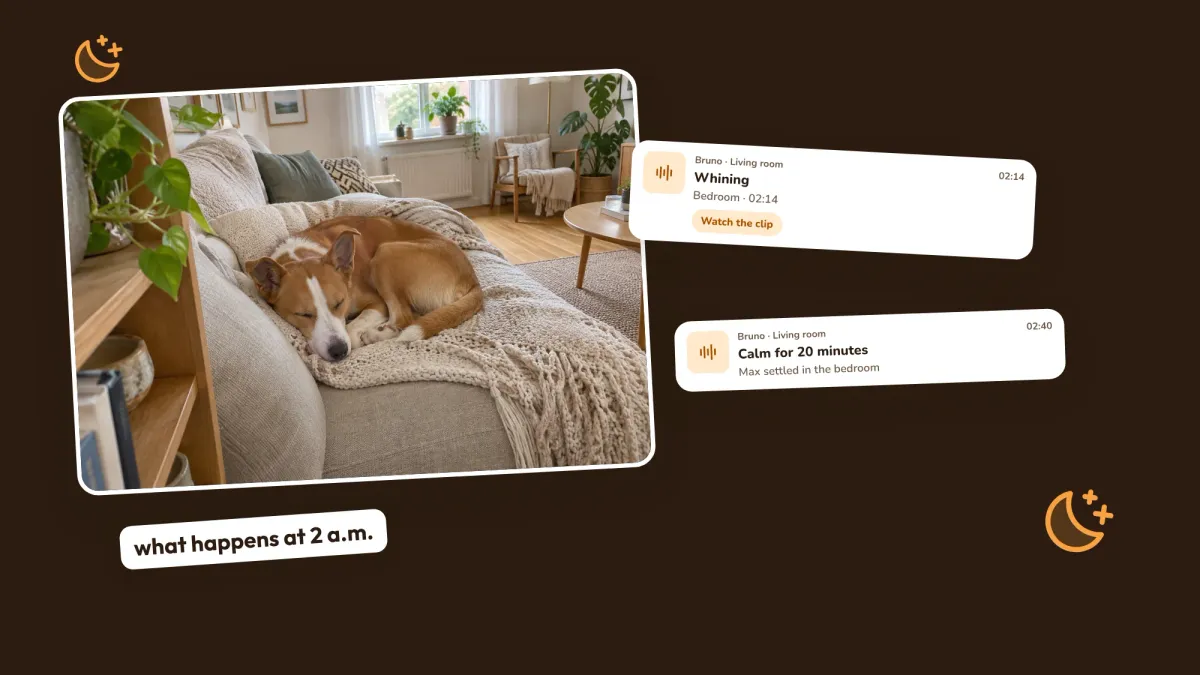
Dog barking or whining at night: causes and fixes
Night-time barking and whining wakes the whole house. Here's why dogs do it, how to find out what's happening at 2 a.m., and the fixes that work for puppies, adults and seniors.
Questions or thoughts? Share them below.