
Leaving a puppy alone for the first time: a week-by-week plan
Teaching a puppy to be alone is one of the kindest things you can do for their future. Here's a gentle, week-by-week plan, what to watch for, and how to know it's working.

Michal Wlosik
· 3 min read
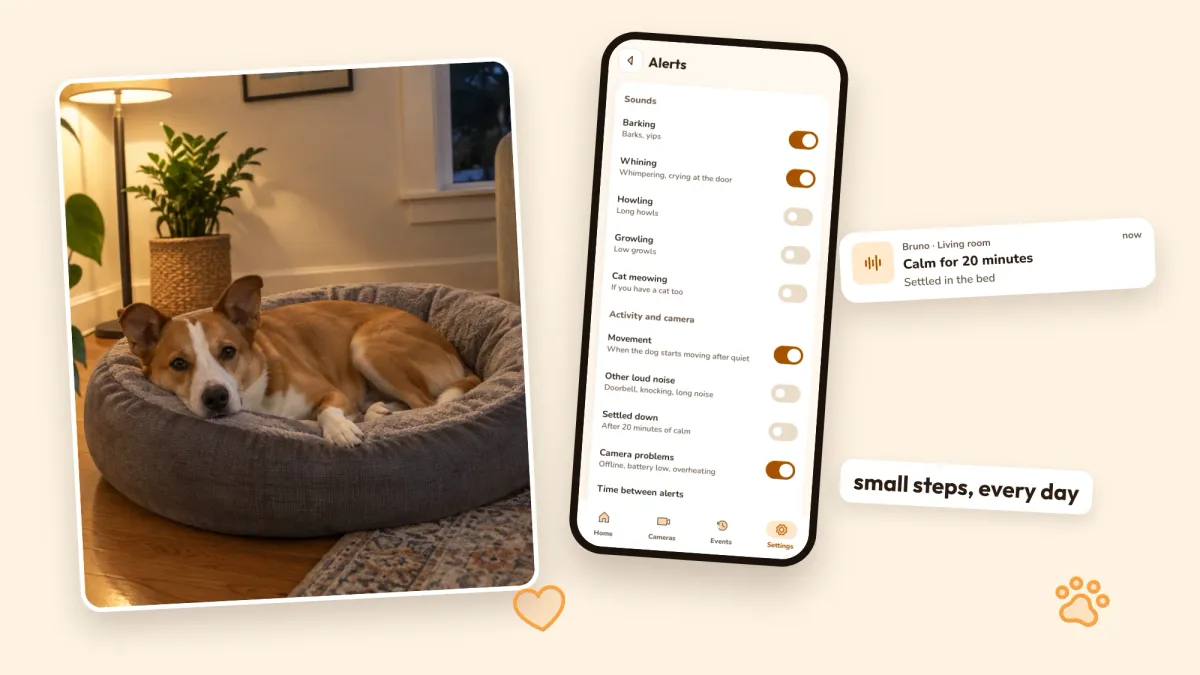
Puppies aren't born knowing how to be alone. Taught gently and early, it becomes a normal, boring part of the day, which is exactly what you want. Rushed, it can turn into a lasting fear.
The principle: small steps, always calm
Every practice should end before your puppy gets upset. If they stay relaxed, add a little time next session. If they struggle, go back a step. Progress isn't a straight line, and that's fine.
An example week-by-week plan
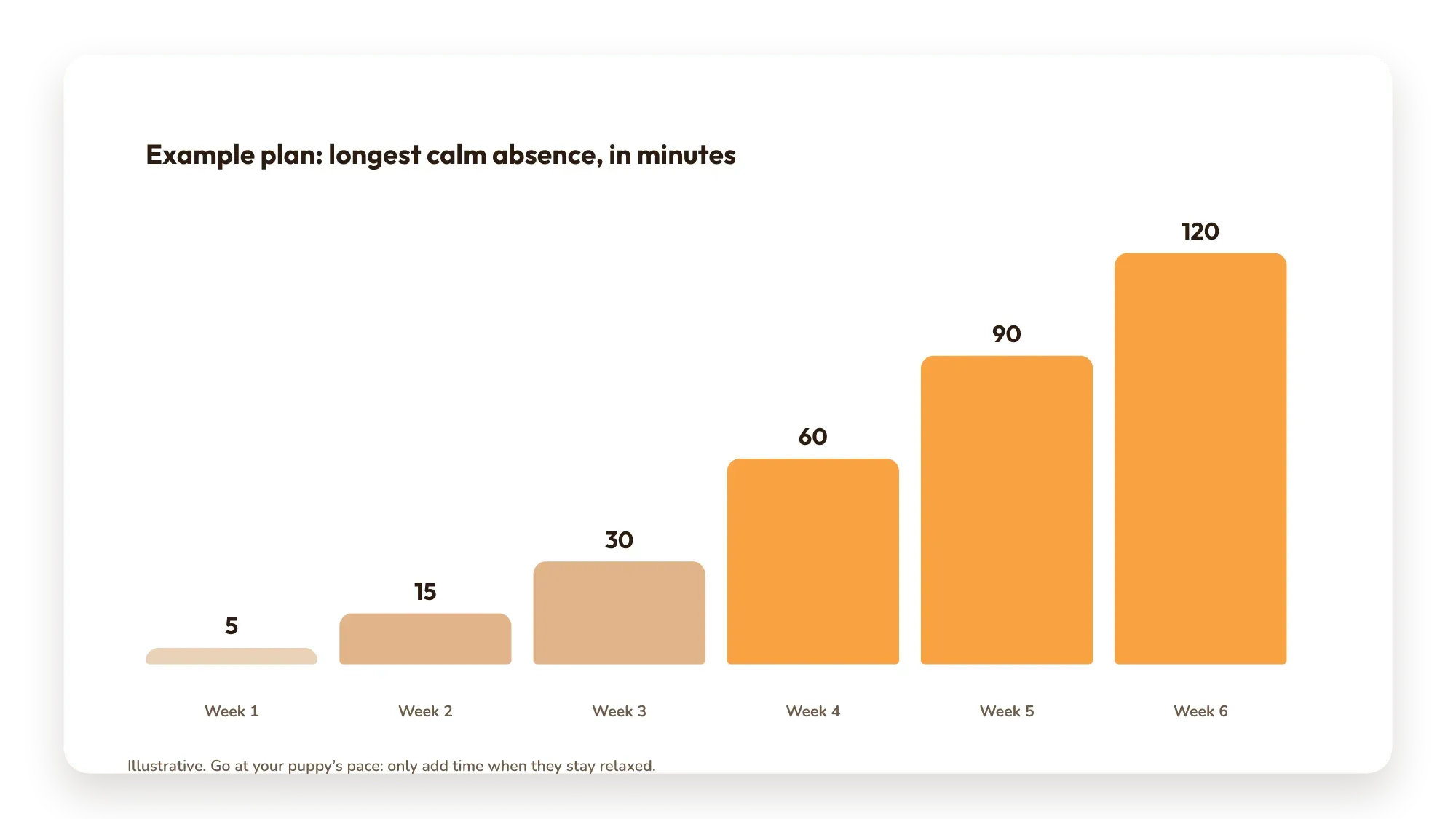
Week 1: alone in another room
Leave your puppy with a chew in a puppy-safe room or pen, step out of sight for a few seconds, and come back calmly. Build up to a few minutes, several times a day, especially when they're tired after play.
Week 2: out of the front door
Put on your shoes, step outside for a minute or two, and come back. Mix in "fake" departures where you pick up your keys and sit back down.
Weeks 3–4: short real outings
Quick trips like taking the bin out or a walk round the block, building towards half an hour and then an hour, if your puppy stays relaxed.
Weeks 5–6 and beyond
Gradually longer outings. Keep them well within your puppy's toilet limits, and plan visits on longer days. Our guide how long can a dog be left alone has a rough guide by age.
Set them up to succeed
- Practise after exercise and a toilet trip, when your puppy is ready to nap.
- Leave something to do: a stuffed chew toy or a snuffle mat.
- Keep goodbyes and hellos low-key.
- A safe space: a pen or puppy-proofed room, with water and a bed.
How to know it's working
You can't see a calm puppy from the other side of the door, which is why a camera helps so much in these weeks. Bruno, on a spare Android phone, alerts you if your puppy whines, barks or howls, and tells you when they've been calm for 20 minutes. The timeline shows each session, so you know when to add time and when to slow down.
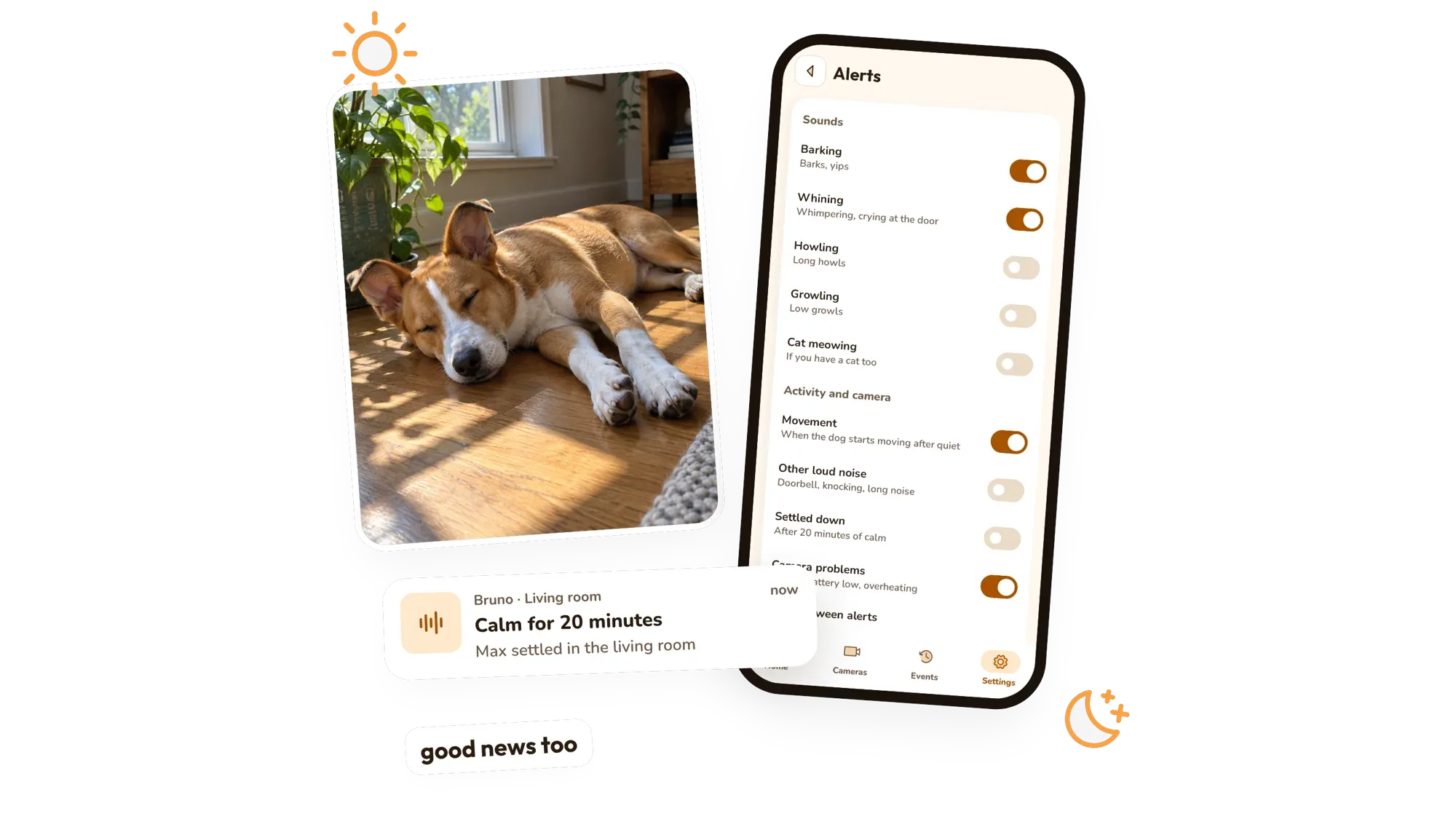

Watch your puppy's progress.
Bruno tells you when your puppy whines, and when they settle. Free on Google Play.
Signs to slow down
- Whining, barking or howling that doesn't stop
- Scratching at the door, or pacing
- Accidents in an otherwise clean puppy
- Not touching the chew they love
If these keep happening even at short absences, talk to your vet. Early help makes a big difference; see signs of separation anxiety in dogs.
Questions people ask
When can I start leaving my puppy alone?
Should I leave my puppy in a crate or a pen?
A puppy cam from a spare phone.
Live view, whine alerts and a calm timeline with Bruno.
Written by
Indie app builder and pet lover based in Wrocław, Poland. I make Bruno so you can check on your dog with a phone you already own. Co-author of The AdTech Book.
Keep reading
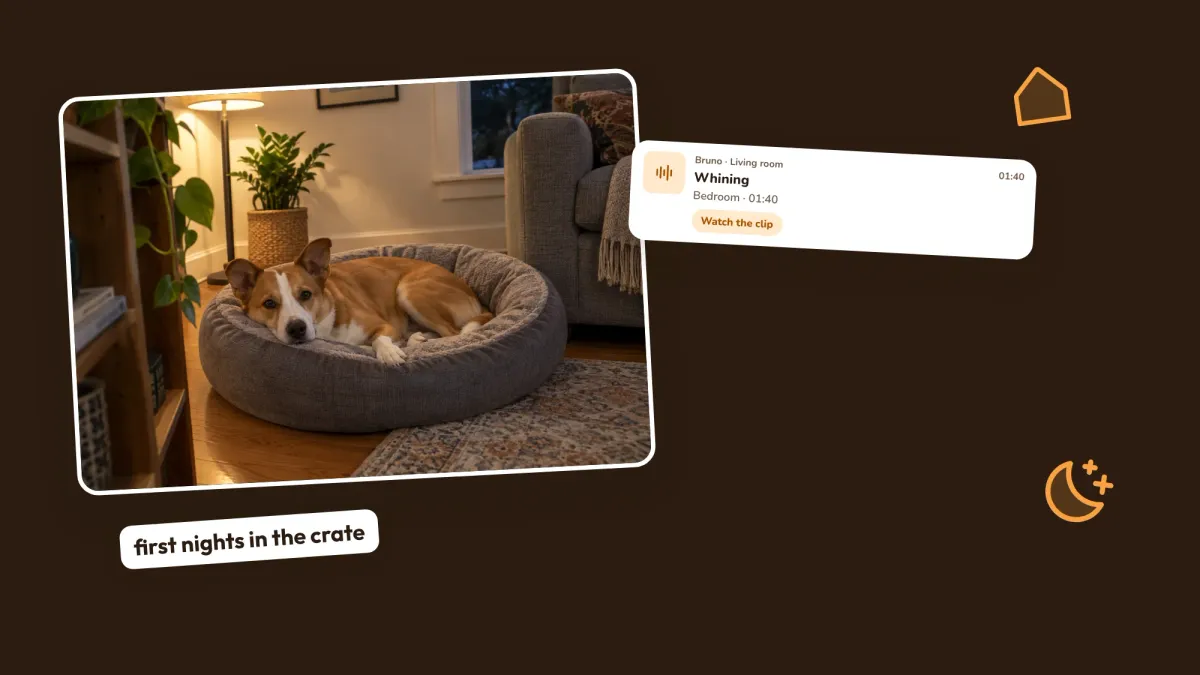
Crate training a puppy at night: a calm, step-by-step guide
The first nights with a puppy are hard on everyone. Here's how to set up the crate, handle night-time toilet trips and whining, and help your puppy sleep through.
Questions or thoughts? Share them below.